



The Protestants / no surrender
The protestants : No Surrender is a self-published photo zine by Ed Kashi.
Softcover, 47pg. B&W
11" x 9"
1991
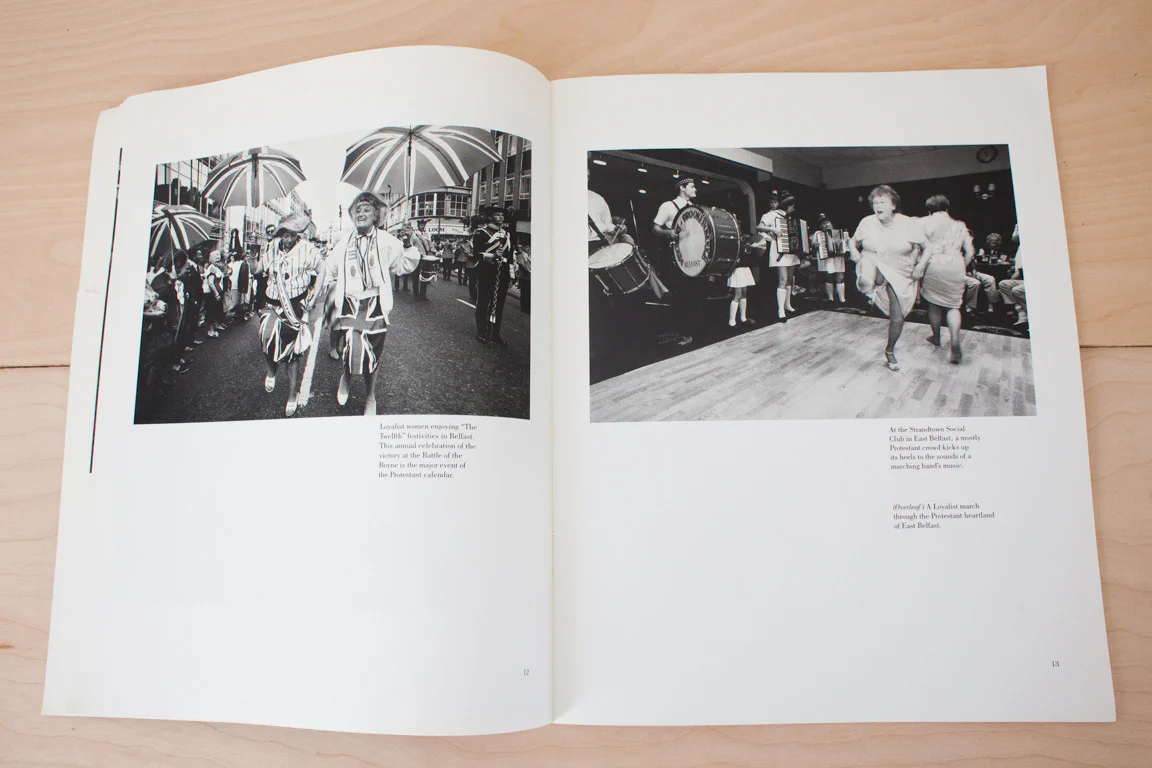
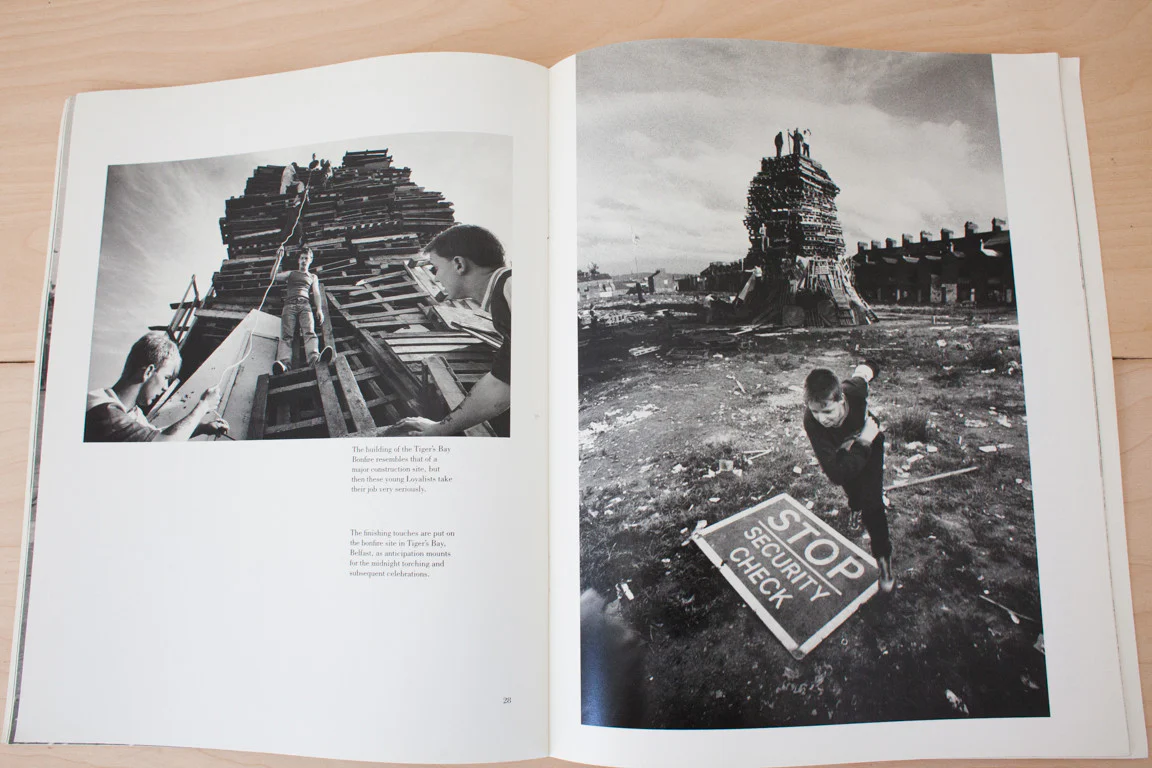
"Provides an intimate look at Northern Ireland’s fractious Protestant neighborhoods in an attempt to illustrate that loyalist sections of Belfast were far from a ruling upper class, and that, perhaps, what many fail to remember is that the real struggle for equality can only begin after peace – that consciously continuing a war can inadvertently make one’s own self the oppressor. Many parts of Ireland are not quite the happy-go-lucky places often imagined. In Belfast, rainbows, smiling old men, tweed coats, stone fences, and a jubilant lifestyle can be as much a myth as the leprechaun. Rebel songs are still sung at funerals, propagandist murals still loom over streets, politically charged bonfires roar on symbolic holidays, neighborhoods are fiercely divided. In short, the pain is too fresh to be entirely forgotten and under increasing economic hardship, violence should not be unexpected.
“I feel for any man, woman or child that has had to live in a war and the nightmare stories I’ve heard from both sides are nothing short of shocking – shootings, torture, bombings, riots, prostitution, gun running and public rape. The majority of these horrors were hidden from newspapers…It was easy to forget that when the IRA fired back against the ‘occupying government’ they didn’t take sharp aim, but instead lashed out at any and all that weren’t from their neighborhood or didn’t go to their church.” – Ed Kashi
Product Information
Product Information
Shipping & Returns
Shipping & Returns
Description
The protestants : No Surrender is a self-published photo zine by Ed Kashi.
Softcover, 47pg. B&W
11" x 9"
1991
"Provides an intimate look at Northern Ireland’s fractious Protestant neighborhoods in an attempt to illustrate that loyalist sections of Belfast were far from a ruling upper class, and that, perhaps, what many fail to remember is that the real struggle for equality can only begin after peace – that consciously continuing a war can inadvertently make one’s own self the oppressor. Many parts of Ireland are not quite the happy-go-lucky places often imagined. In Belfast, rainbows, smiling old men, tweed coats, stone fences, and a jubilant lifestyle can be as much a myth as the leprechaun. Rebel songs are still sung at funerals, propagandist murals still loom over streets, politically charged bonfires roar on symbolic holidays, neighborhoods are fiercely divided. In short, the pain is too fresh to be entirely forgotten and under increasing economic hardship, violence should not be unexpected.
“I feel for any man, woman or child that has had to live in a war and the nightmare stories I’ve heard from both sides are nothing short of shocking – shootings, torture, bombings, riots, prostitution, gun running and public rape. The majority of these horrors were hidden from newspapers…It was easy to forget that when the IRA fired back against the ‘occupying government’ they didn’t take sharp aim, but instead lashed out at any and all that weren’t from their neighborhood or didn’t go to their church.” – Ed Kashi